Salkantay Trek to Humantay Lake and Machu Picchu
My knees were shaking before we even reached the water. Most people assume the hardest part of the route happens on day two when you cross the pass at 4,630 meters, but the steep scramble out of Soraypampa on the first afternoon catches almost everyone off guard. The air is razor thin, your lungs burn after twenty paces, and the icy wind coming down from the snowfields smells faintly of wet slate and mule dung. It is punishing work, which is why the humantay lake salkantay trek remains the single best alternative to the crowded Classic Inca Trail for anyone who actually wants to feel small in the Andes.
Planning this route involves a lot of moving parts. You go from sub-zero glacial moraines to humid cloud forests choked with wild orchids in less than 48 hours, ending at the Sun Gate or the train tracks of Aguas Calientes. Below, I break down what day one looks like on the ground, how the traverse over the mountain pass works, what to expect if you sleep in the glass domes at base camp, and how to piece together the entire journey without losing your mind or your luggage.
Book your humantay lake experience:
The First Day Push: Soraypampa to Humantay Lake
The standard trek starts absurdly early in Cusco. Vans pull up outside hostals around 4:30 in the morning, packing sleepy travelers together for the three-hour drive toward Mollepata. You get a quick breakfast of dry bread, scrambled eggs, and instant Nescafe before continuing another hour along a sheer dirt road that clings to the canyon wall. By the time the van wheels crunch to a halt on the wide gravel flats of Soraypampa, it is barely 10:00 AM. You look up and see Mount Salkantay brooding to the south and Mount Humantay rising like a sheer wall of white ice directly above you.
This is where the climb begins. The trek from soraypampa to humantay lake is technically a side trip on the first day of the multi-day circuit, but skipping it is a mistake. The trail climbs roughly 350 vertical meters in just under two kilometers. That sounds like a walk in the park on paper. At 3,900 meters above sea level, it feels like dragging an anvil uphill. The path consists of loose stones, scree, and deep ruts carved by pack horses. If you want a detailed breakdown of the terrain, take a look at our Humantay Lake hike difficulty guide, which covers the physical toll of this specific spur.
Pro tip: Do not rush the first twenty minutes out of camp. Hikers who sprint through the flat pasture burn out completely on the switchbacks; take steps half the size of your normal stride and keep your mouth shut against the dry mountain wind.
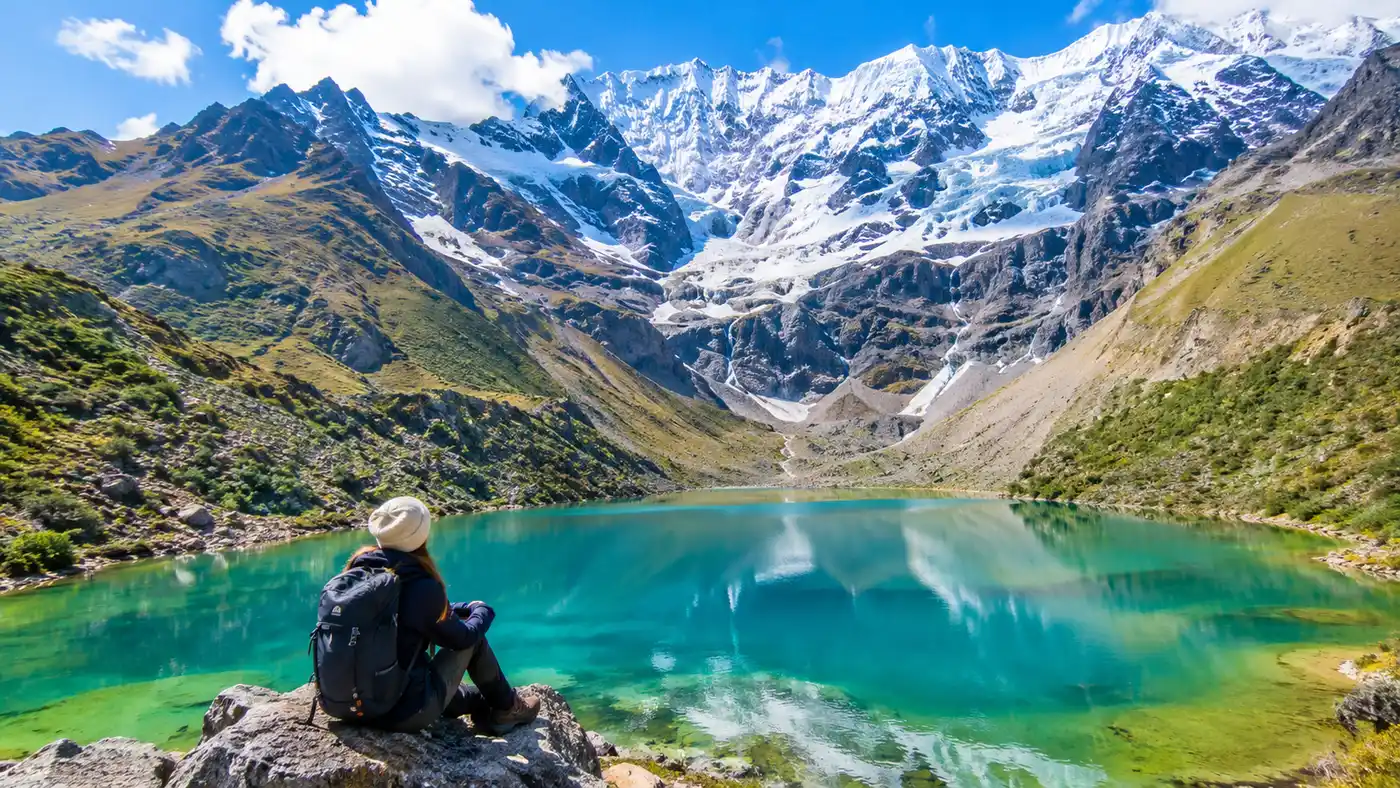
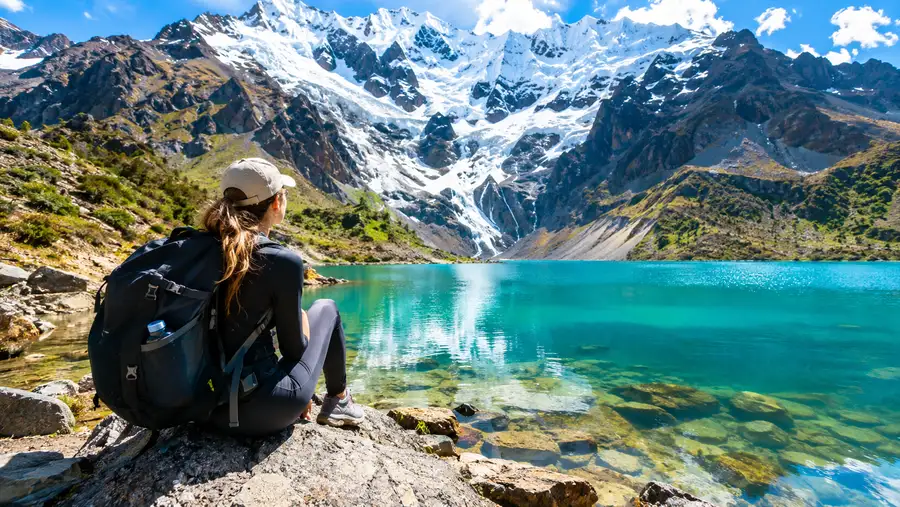
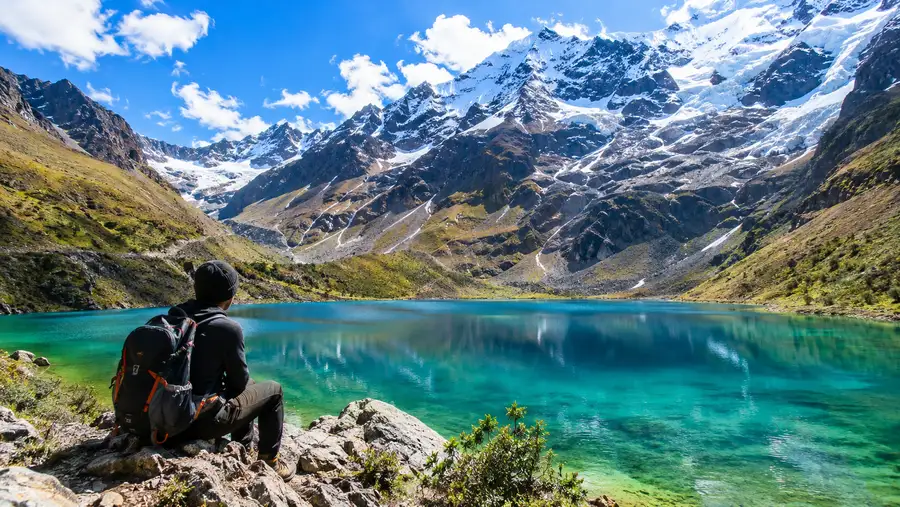
Reaching the crest changes everything. The ground flattens abruptly, and there it is: a shock of bright turquoise water cradled inside a bowl of black moraine, with the hanging glacier dripping water straight down into the pool. It does not look real. On sunny days, the mineral density reflects an electric green hue that shifts to milky blue when clouds roll over the peak. Most groups spend about 45 minutes walking along the rocky rim, shivering in the breeze and taking photos before scrambling back down to camp for lunch.
Sleeping Beneath Glaciers at Sky Camp Humantay Lake
Ten years ago, sleeping at Soraypampa meant shivering inside a leaking canvas tent pitched on frozen dirt. Today, the flats are dotted with translucent geodesic domes. Booking a stay at sky camp humantay lake or one of the neighboring dome villages gives you a front-row seat to one of the wildest night skies on the continent. The southern constellations, especially the Southern Cross and the Milky Way, stretch across the valley between the jagged silhouettes of the two peaks.
The domes look futuristic, but do not mistake them for five-star luxury resorts. They are made of plastic paneling designed to trap heat, yet once the sun drops behind Mount Humantay around 5:30 PM, the temperature inside plummets fast. By 9:00 PM, your breath condenses on the plastic ceiling and drips down like faint rain. You sleep under three thick alpaca wool blankets and a heavy down sleeping bag. Honestly, keeping your beanie pulled over your ears while you sleep is the only way to stay warm.
Meals in these camps are surprisingly hearty. The camp cooks work magic in small tin-roofed kitchens, turning out hot bowls of quinoa soup, lomo saltado, fried trout, and mountains of rice. You eat early, usually around 6:30 PM, huddled around wooden trestle tables with a cup of hot muña tea in your hands. Sleep comes early too. By 8:30 PM the entire camp goes dead quiet, save for the occasional roar of an avalanche tumbling down the distant faces of humantay lake peru salkantay.
From Alpine Ice to Cloud Forest: Humantay Lake to Machu Picchu
Day two is the real test of endurance. You wake up at 5:00 AM to a guide knocking on your dome with a cup of hot coca tea. After packing your duffel, you start walking toward the Salkantay Pass. The ascent is long, slow, and bitterly cold. The section known as the "Trail of the 7 Snakes" twists up a relentless gravel ridge where every step requires conscious effort. When you finally hit the cairn-marked summit at 4,630 meters, you are standing between two massive glaciated giants. The relief is palpable, but the hiking is far from over.
The descent from humantay lake to machu picchu flips the environment upside down. In a single six-hour push, you drop from barren, oxygen-starved rock fields down into the warm, humid air of Chaullay. The temperature jumps by fifteen degrees Celsius. Lichen and frost give way to thick bamboo groves, blooming begonias, and noisy green parrots. Your knees take a beating during this section because you drop nearly 1,800 vertical meters before setting up camp for the second night.
The journey continues down the valley following the Santa Teresa River. Over days three and four, the trail winds past small coffee plantations, avocado trees, and granadilla vines. Most itineraries include a stop at the Cocalmayo hot springs near Santa Teresa, which feel like absolute heaven on swollen calf muscles. The final approach involves walking along the train tracks from Hidroeléctrica to Aguas Calientes, a flat, ten-kilometer trek through dense jungle canopy with the sheer granite cliffs of Machu Picchu looming thousands of feet directly above your head.
| Trek Style | Duration | Key Highlights | Pace & Effort |
|---|---|---|---|
| Classic Salkantay | 5 Days / 4 Nights | Humantay Lake, Salkantay Pass, Santa Teresa, Llactapata ruins | Moderate to challenging; well-spaced distances |
| Express Route | 4 Days / 3 Nights | Skips Llactapata; takes direct van transfers along the river valley | Demanding; long daily mileage on days two and three |
| Luxury Dome Trek | 5 Days / 4 Nights | Glass domes, private bathrooms, hot showers, gourmet camp meals | Moderate; focus on comfort and slower acclimatization |
| Extended Explorer | 6 Days / 5 Nights | Includes Humantay, Salkantay Pass, and an extra day in the cloud forest | Relaxed; ideal for photography and plant lovers |
Book your humantay lake experience:
Booking, Costs, and the 06 Day Cusco Machu Picchu Humantay Lake Rainbow Mountain Route
You can book this trek through hundreds of agencies in Cusco, and prices vary wildly depending on whether you choose shared canvas tents or glass dome glamping. Budget operators offer the standard five-day trek for around $250 to $320, though that usually means freezing nights, basic food, and guides managing thirty people at once. Mid-range outfits charge between $450 and $600, providing solid gear, smaller groups of eight to ten hikers, and dome accommodations at Soraypampa.
Many travelers try to combine every major regional highlight into a single ticket. The popular 06 day cusco machu picchu humantay lake rainbow mountain package strings together Cusco acclimatization, the Salkantay route, and a dawn hike up Vinicunca. While it sounds efficient, doing both alpine lakes and high-altitude ridges back-to-back can wreck your body if you have not spent several days adapting in town first. If you are debating between those two iconic spots, read our breakdown on Rainbow Mountain vs Humantay Lake before locking in your travel dates.
Note: Circuit rules at Machu Picchu change often. Ensure your Salkantay package explicitly includes Circuit 2A or 2B if you want the classic panoramic postcard photo from the upper terrace, as cheaper agencies frequently downgrade tickets to the lower ruins circuits without telling you.
Packing for this journey requires smart layering rather than heavy bulk. You are carrying your daypack while mules or porters haul a duffel bag capped strictly at 5 to 7 kilograms, depending on company rules. Here is what actually matters on the trail:
- Base layer tops: two merino wool long-sleeve shirts that dry fast and do not retain sweat smells.
- Outer shell jacket: a genuine windproof and waterproof Gore-Tex shell to block freezing gusts on the pass.
- Trekking poles: a sturdy pair with rubber tips, absolutely mandatory for saving your knees on the 1,800-meter drop to Chaullay.
- Electrolyte tablets: three packs to mix into bottled water, helping counter dehydration caused by altitude and dry air.
- Cash in small soles: at least 300 soles in 10 and 20 notes for hot showers, trail snacks, and tipping porters.
Acclimatization, Pacing, and Surviving Day Two
The high mountain pass is where altitude sickness tends to strike hard. Soraypampa sits at 3,900 meters, which is already higher than Cusco. By the time you start climbing toward humantay lake salkantay, your body needs to produce red blood cells at top speed to keep up with the dropping atmospheric pressure. Skipping your rest days in Cusco is the most common reason people end up riding an emergency mule down the valley.
I recommend spending a minimum of two full days in Cusco or the Sacred Valley before tying your hiking boots. Wander around the San Pedro market, walk slowly up the cobblestone alleys of San Blas, and drink liters of clean water. Avoid heavy meat dishes the night before you leave, because digestion slows down significantly at 4,000 meters, leading to nauseating stomach cramps during early morning climbs.
When you are on the trail, pacing is everything. You will see local porters in sandals carrying 20-kilo packs glide past you without breaking a sweat, but trying to match their tempo is a guaranteed way to trigger a pounding altitude headache. Keep these practical habits in mind while you hike:
- Rest step technique: lock your trailing knee on every uphill stride to briefly transfer your body weight directly to the bone structure.
- Consistent water intake: drink half a liter every ninety minutes, even if the cold mountain wind tricks you into thinking you are not thirsty.
- Coca leaf chewing: keep a small bag of fresh green leaves tucked against your cheek with a pinch of llipta ash to combat lightheadedness.
- Layer management: strip off your heavy fleece before you start sweating on climbs, then put it right back on the moment you halt for a break.
Frequently Asked Questions about humantay lake salkantay trek
Can I hike to Humantay Lake on a standard Salkantay Trek?
Yes. Almost every standard 4-day or 5-day itinerary includes the afternoon hike up to Humantay Lake on day one after arriving at the Soraypampa base camp.
Is an emergency horse available if I cannot make the climb?
Local horse handlers at Soraypampa rent out saddle horses for roughly 80 to 100 soles to carry tired hikers up the steep switchbacks to the lake, though you must walk the downhill portion yourself.
How cold does it get at base camp overnight?
Nighttime temperatures at Soraypampa routinely drop between -2°C and 4°C (28°F to 39°F) from May through September, meaning thermal layers and cold-rated sleeping bags are essential.
Quick Reference
- Trailhead: Soraypampa (3,900m)
- Humantay Lake Elevation: 4,200m
- Salkantay Pass: 4,630m
- Total Trek Distance: 74 km (5-day route)
- Best Season: May to October
Book your humantay lake experience:
The Bottom Line
The route from Soraypampa up past Humantay Lake and over the icy shoulders of Salkantay is raw, dirty, and exhausting. You will wake up cold, your legs will ache for days, and the final walk down the train tracks into town tests your patience. But standing on the rocky lakeshore with morning sunlight hitting the glacial ice makes every steep switchback completely worthwhile. Give your body time to adapt in Cusco, pack light layers that actually keep the frost out, and do not let the first day steepness scare you away from finishing the walk to the lost city.
Read more about humantay lake.