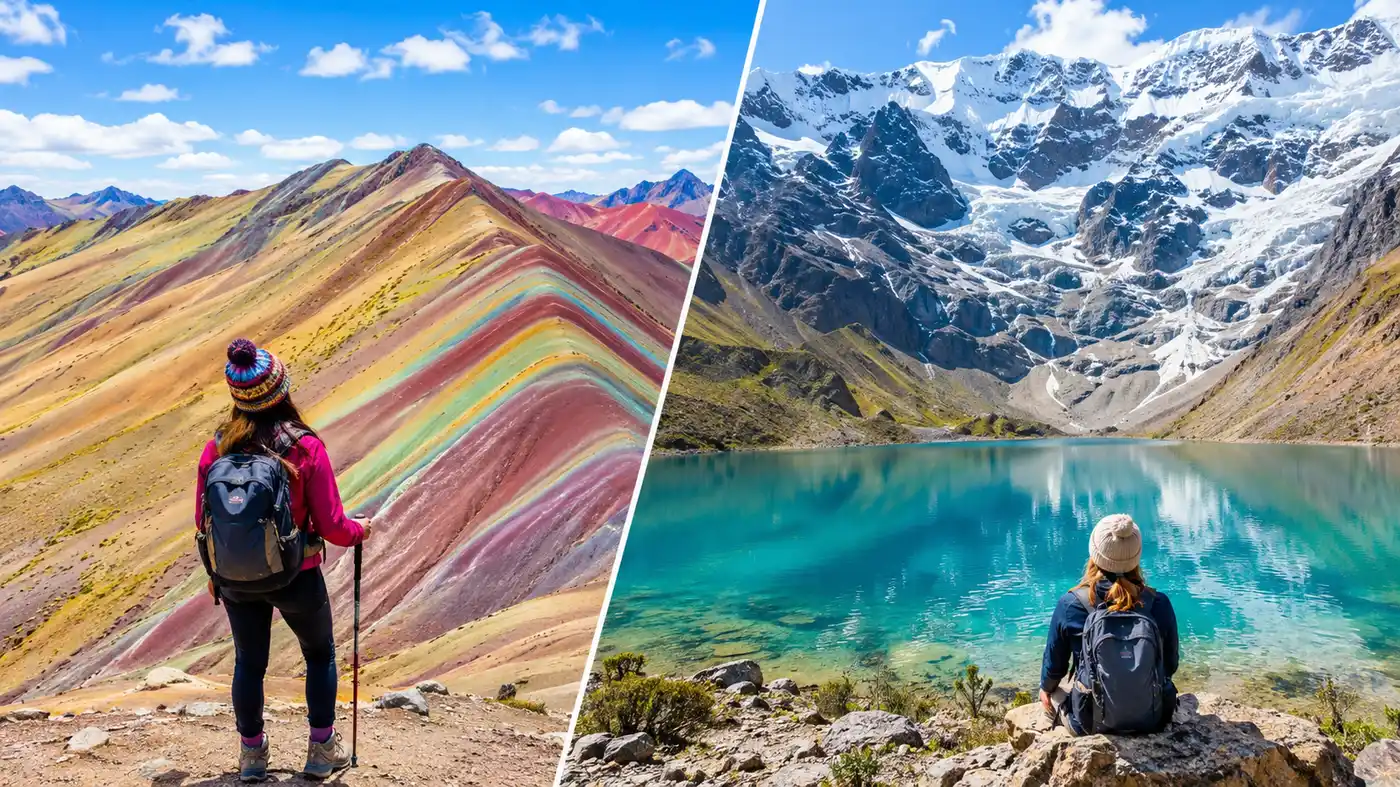
Rainbow Mountain vs Humantay Lake: Which Day Hike is Best?
You are standing in Cusco's Plaza de Armas at eight o'clock at night, shivering slightly as the Andean chill rolls down from the hills. Every tour operator along Calle Plateros has the exact same laminated posters taped to their windows: the surreal pink-and-yellow mineral ridges of Vinicunca and the neon turquoise water sitting beneath Mount Salkantay. If you only have one spare day before your train to Aguas Calientes, choosing between rainbow mountain vs humantay lake can induce real decision paralysis. Both hikes demand brutal pre-dawn alarms, both push your cardiovascular system to its absolute limit, and both cost about $35 to $45 on a budget group tour.
Yet they offer fundamentally different days in the mountains. One is an open, windswept moonscape that looks like a painted desert perched at commercial airline cruising altitude. The other is a classic alpine amphitheater dominated by hanging glaciers, jagged granite, and an impossibly vivid glacial pool. I have dragged myself up both trails more than once, battling the thinning air, the early mornings, and the mule droppings along the path. Here is how they actually stack up against each other so you can pick the right one for your lungs, your photography style, and your trip schedule.
Book your humantay lake experience:
Altitude and Trail Difficulty: A Tale of Two Suffering Styles
Do not let anyone tell you either of these hikes is easy. They are not easy. Walking upstairs at 3,400 meters in downtown Cusco is enough to make a fit person pause on a landing, so climbing another thousand meters up into the clouds is an assault on the senses. The physical challenge between the two, though, feels very different on your legs.
Humantay Lake is short and steep. You start at Soraypampa, roughly 3,850 meters above sea level, and you climb straight up a loose dirt and shale ridge to 4,200 meters. The trail is only about two kilometers each way, but you gain 350 meters of vertical elevation in that tiny span. It is relentless. There are almost no flat sections to catch your breath, your calves burn immediately, and if it rained the night before, the mud turns the slope into a slippery slide. Most people take around 90 minutes to crawl up this short wall, stopping every thirty paces to lean on their trekking poles. For a detailed breakdown of the terrain, check out this trail difficulty guide for Humantay before packing your boots.
Note: Horse rentals at both trailheads are widely available from local horsemen, but they only carry you uphill, not downhill. If your knees struggle on steep descents, you will still have to walk the entire way down yourself.
Rainbow Mountain is an entirely different beast because of pure elevation. The hike itself, if you take the standard trail through Cusipata, is surprisingly gentle for the first two-thirds. You walk across a wide, sweeping alpine valley with red dirt rolling out on either side. The incline is gradual until the final brutal push up the switchbacks to the viewing ridge. The catch? You begin walking at 4,630 meters and finish at 5,036 meters. That is higher than Mont Blanc. At 5,000 meters, there is roughly half the effective oxygen you get at sea level. Your headache might pound behind your eyes, your fingers swell, and putting one boot in front of the other feels like walking through deep wet cement.
So, which is harder? If you hate steep climbing, Rainbow Mountain is technically easier on the leg muscles, but the altitude will crush you if you are not acclimatized. If you struggle with steep grades, Humantay is a lung-busting stair-climber workout, though you are far less likely to get severe altitude sickness because you remain well below that psychological 5,000-meter threshold.
The Scenery: Mineral Ridges vs Glacial Giants
Visual expectations often clash with Andean reality. Let us be completely honest about Vinicunca: the colors in raw real life look somewhat different from the over-saturated HDR nightmares plastered across social media. On a dull, overcast morning, the red and turquoise stripes can look muted, almost earthy. When the sun bursts through the cloud deck, the iron oxide, copper, and sulfur deposits glow across the ridgeline like a canvas. The surrounding Red Valley, which you can tack onto the hike for an extra 25 soles, looks like Mars dropped into the Andes. It is wide, barren, vast, and silent.
Humantay Lake delivers something more intimate and dramatic. You hike beneath the colossal, hanging ice falls of Mount Salkantay and Mount Humantay. When you finally breach the crest of the lateral moraine, the lake appears suddenly, nestled in an icy bowl. The water color is real. Sunlight hits the glacial silt suspended in the water, scattering the light into brilliant turquoise and emerald hues. You can sit on the rock wall along the shore and listen to chunks of ice crack off the glacier above, echoing like distant thunder across the water.
Pro tip: When you arrive at Humantay, do not stay at the lower edge where everyone gathers for group photos. Take the faint dirt path up the ridge to the left; ten minutes of slow climbing gives you a panoramic vantage point over the entire lake with far fewer people in your frame.
Browsing through recent humantay lake reviews, you will notice a common theme: travelers who visit both often find Humantay more majestic in person. Rainbow Mountain feels like visiting a natural monument, you stare at the view, snap your pictures, endure the biting wind, and leave. Humantay feels like sitting inside a living mountain sanctuary. If you are asking yourself is humantay lake worth it, the lake's sheer geological drama usually answers that within ten seconds of arrival.
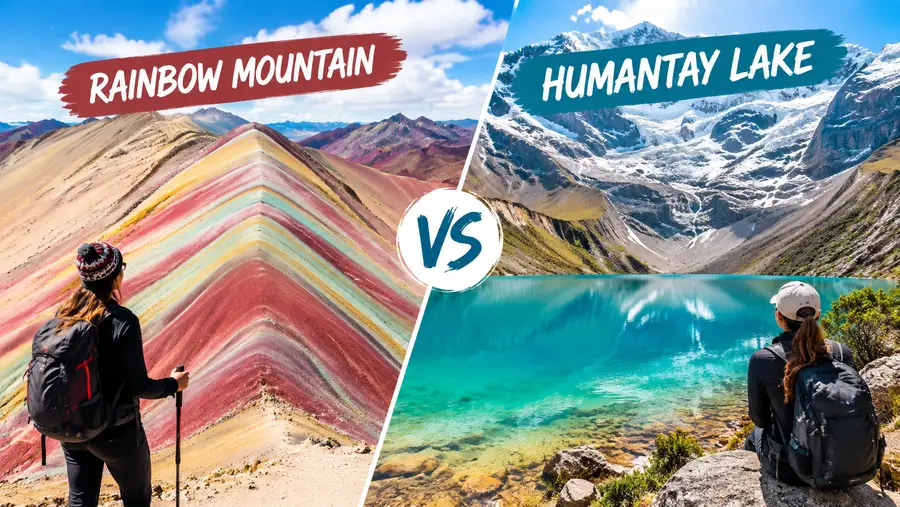
Logistics, Drive Times, and Crowds
Both trips require you to accept that day tours in Cusco involve spending far more time inside a cramped white Mercedes Sprinter van than on the actual mountain trail. You will wake up before dawn, bounce along dirt switchbacks on cliff edges, and eat simple buffet breakfasts in rural family compounds.
Rainbow Mountain tours usually knock on your hostel door between 3:15 AM and 4:00 AM. The drive out toward Cusipata takes roughly three hours, with the final 45 minutes spent crawling up a dizzying dirt road carved into the canyon wall. You typically start hiking around 8:00 AM. Because dozens of agencies run on the exact same schedule, you will arrive alongside roughly 1,500 other tourists. The viewing ridge gets packed. People queue up in long lines just to take a photo on the highest point with the striped background behind them.
Humantay Lake departures are equally punishing, typically between 4:00 AM and 4:45 AM. You drive northwest toward Mollepata, eat breakfast, and then navigate a notoriously rough, winding track to Soraypampa. Total drive time is around three and a half hours each way. While Humantay is heavily visited, the crowd feels more dispersed. Many hikers on the trail are actually starting the multi-day trek to Machu Picchu, so the vibe at the trailhead has an adventurous, expedition feel. For practical advice on booking independent transport versus cheap agencies, read our overview on how to get to Humantay Lake.
| Feature | Rainbow Mountain (Vinicunca) | Humantay Lake |
|---|---|---|
| Trailhead Elevation | 4,630 m (15,190 ft) | 3,850 m (12,630 ft) |
| Maximum Elevation | 5,036 m (16,522 ft) | 4,200 m (13,779 ft) |
| Hiking Distance (Round Trip) | 7.5 km (4.6 miles) | 4.2 km (2.6 miles) |
| Average Trail Time | 3 to 3.5 hours | 2.5 to 3 hours |
| Drive Time from Cusco (One Way) | 3 hours | 3.5 hours |
| Terrain Type | Gradual dirt track, steep final ridge | Rocky, steep moraine switchbacks |
| Typical Tour Cost (Soles) | 90 - 130 PEN ($25 - $35 USD) | 90 - 120 PEN ($25 - $32 USD) |
Book your humantay lake experience:
The Wildcard: 7 Lakes of Ausangate vs Humantay Lake
Many seasoned travelers find themselves looking past the mainstream options. If you wander into the smaller trekking outfits in San Blas, you will inevitably hear people debating the 7 lakes of ausangate vs humantay lake. This comparison comes up because both feature turquoise glacial water, but the experience could not be more different.
The Ausangate day circuit leaves from the remote village of Pacchanta. Instead of visiting a single lake alongside hundreds of day-trippers, you hike past seven distinct alpine tarns ranging from deep navy to milky jade, all sitting directly under the massive south face of Mount Ausangate. When considering humantay lake vs 7 lakes, the primary trade-off is physical effort. The 7 Lakes trail is significantly longer, roughly 14 kilometers of walking at an average altitude of 4,500 meters. It takes between five and six hours of solid hiking.
However, Pacchanta has something neither Rainbow Mountain nor Humantay can match: natural thermal hot springs at the end of the trail. Soaking in 39-degree mineral pools with a cold beer, staring right at a snowcapped mountain after fifteen kilometers of high-altitude walking, is hard to beat. If you have the stamina for a longer day and want to escape the influencer crowds completely, Ausangate's lakes might actually beat both Humantay and Vinicunca.
Still, for people with limited time or average fitness levels, Humantay remains far more accessible. You get your glacial scenery fix in a compact morning, leaving you with enough energy to enjoy Cusco the following day.
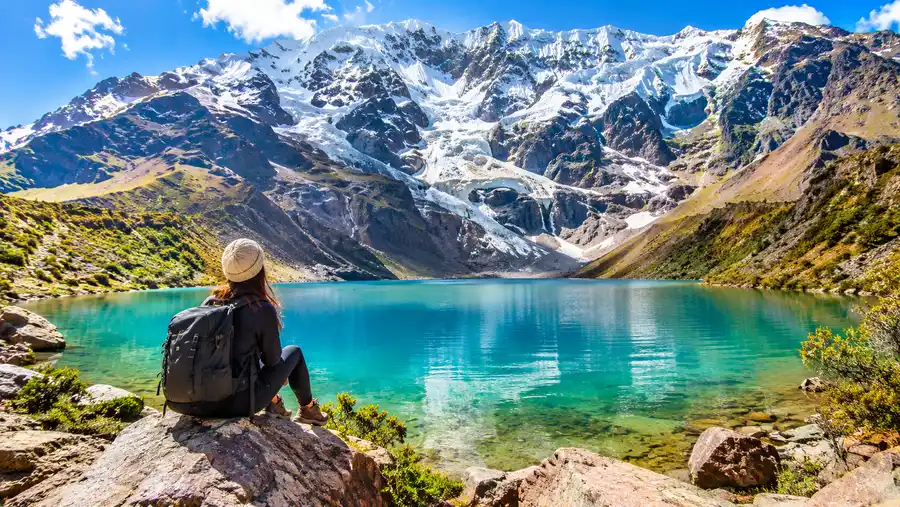
Can You Do Both: Humantay Lake and Rainbow Mountain?
You can definitely do both humantay lake and rainbow mountain during the same week. Many travelers do. The real trick lies in sequencing them correctly so you do not ruin your body on day one.
Never tackle Rainbow Mountain on your first full day in Cusco. Arriving from Lima at sea level and heading straight to 5,036 meters within 24 hours is a reliable recipe for altitude sickness, nausea, and a ruined trip. Take at least two full days in the Sacred Valley or Cusco to adjust. Use those days to drink plenty of water, sip muña tea, and walk the cobbles around Sacsayhuamán.
Once you are feeling relatively stable, follow this practical itinerary:
- Day one (Acclimatization): Walk the ruins around Cusco or explore Pisac and Ollantaytambo at lower elevations.
- Day two (First summit test): Hike Humantay Lake. It tests your legs on steep terrain, but tops out at 4,200 meters, which acts as the ideal stepping stone for your red blood cells.
- Day three (Rest or transit): Take an easy day wandering San Pedro Market, or take your train down to Machu Picchu.
- Day four (The high-altitude push): Hike Rainbow Mountain. Your lungs will handle the 5,036-meter pass far better after having already exerted themselves at Humantay.
Weather is another critical factor to weigh before booking. Rain turns the red clay around Vinicunca into thick slick mud and hides the colorful mineral layers beneath dreary fog. At Humantay, heavy clouds can completely shroud the peaks, leaving you staring into white mist instead of hanging glaciers. Checking the seasonal forecasts in our guide to Humantay Lake weather will help you align your hiking days with the clearest morning windows.
Frequently Asked Questions about rainbow mountain vs humantay lake
Which hike has worse altitude sickness risks?
Rainbow Mountain carries a significantly higher risk of acute mountain sickness because it peaks at 5,036 meters. Humantay Lake tops out at 4,200 meters. That 800-meter difference is massive in terms of oxygen pressure, making Rainbow Mountain much harder on unacclimatized travelers.
Can I ride a horse on both trails?
Yes, local horse handlers rent horses at both trailheads for roughly 80 to 100 soles. However, they only take you uphill to protect the animals' legs, and at Rainbow Mountain, the horse must stop before the final steep staircase to the viewing platform, requiring you to walk the steepest section.
Which hike has better scenery for photos?
Rainbow Mountain offers rare, alien-like landscapes that you cannot find in many other places on Earth, making it iconic for wide panoramic shots. Humantay Lake offers dramatic alpine beauty with turquoise water set against massive glaciers. Humantay tends to look better in variable weather, whereas Rainbow Mountain needs sunlight for the colors to pop.
Are there bathrooms along the trails?
Both hikes have rustic squat toilets at the trailhead parking lots and basic toilet shacks along the path, usually charging one or two soles per use. Bring your own toilet paper and hand sanitizer, as facilities run out of supplies early in the morning.
Quick Reference
- Rainbow Mountain peak: 5,036m (16,522ft)
- Humantay Lake peak: 4,200m (13,779ft)
- Humantay is steeper; Rainbow is higher
- Average day tour price: 90 to 120 Soles ($25 to $35)
- Best acclimation sequence: Humantay first, Rainbow second
Book your humantay lake experience:
My Take
If someone forced me to pick only one hike to repeat tomorrow, I would take Humantay Lake without hesitation. The sheer presence of the glaciated peaks towering over that cold, green-blue water provides a classic mountain experience that makes you feel tiny against the Andes. Rainbow Mountain is unique, no doubt about it, but the overwhelming crowds, the biting ridge winds, and the physical punishment of 5,000 meters can sometimes make the experience feel more like checking off a bucket list item than enjoying the outdoors. If you have the lung capacity and the time, try both, but if your schedule only allows one morning in the high country, put your boots on for Humantay.
Read more about humantay lake.